Choosing the Right Quad Bike Desert Safari in Dubai
Picking a quad bike desert safari in Dubai is less about chasing the most dramatic dunes and more about matching the ride to your experience, comfort and expectations. The desert can feel open and forgiving, but sand, heat and changing light demand a little planning. A good choice starts before you reach the dunes, with a clear idea of what kind of outing you want and what level of riding suits you.
Start with your riding experience
Be honest about how comfortable you are on a quad bike. If you have never ridden one, look for a beginner-friendly option with a calm pace, clear instructions and a route that avoids steep or tightly packed dunes. Experienced riders may want a longer trail with more varied terrain, but that does not mean pushing beyond the limits of the group or the machine.
Think about control rather than speed. A useful ride should let you practise smooth steering, gentle turns and steady throttle use. On sand, sudden moves can dig the front wheels in or make the bike slide sideways. If the pace of a safari depends on riders keeping up, a demanding route can turn a fun outing into a tense one. Choose a format where the pace feels manageable from the start.
Decide what kind of desert experience you want
Quad bike trips can feel quite different depending on the route and timing. Some riders mainly want open desert, wide dunes and room to settle into the ride. Others want the full safari feel, with a guided trail, pauses for photos and time to take in the changing scenery. Decide which matters most: riding time, views, photography, or a broader desert outing.
Check whether dune bashing is part of the experience or separate from the quad bike portion. The two are not the same. Dune bashing usually means riding in a vehicle over dunes, while a quad bike puts you in direct control. If you want a gentler day, keep the riding as the main activity. If you enjoy varied desert activities, a combined format may suit better, as long as the riding section still has enough time and space.
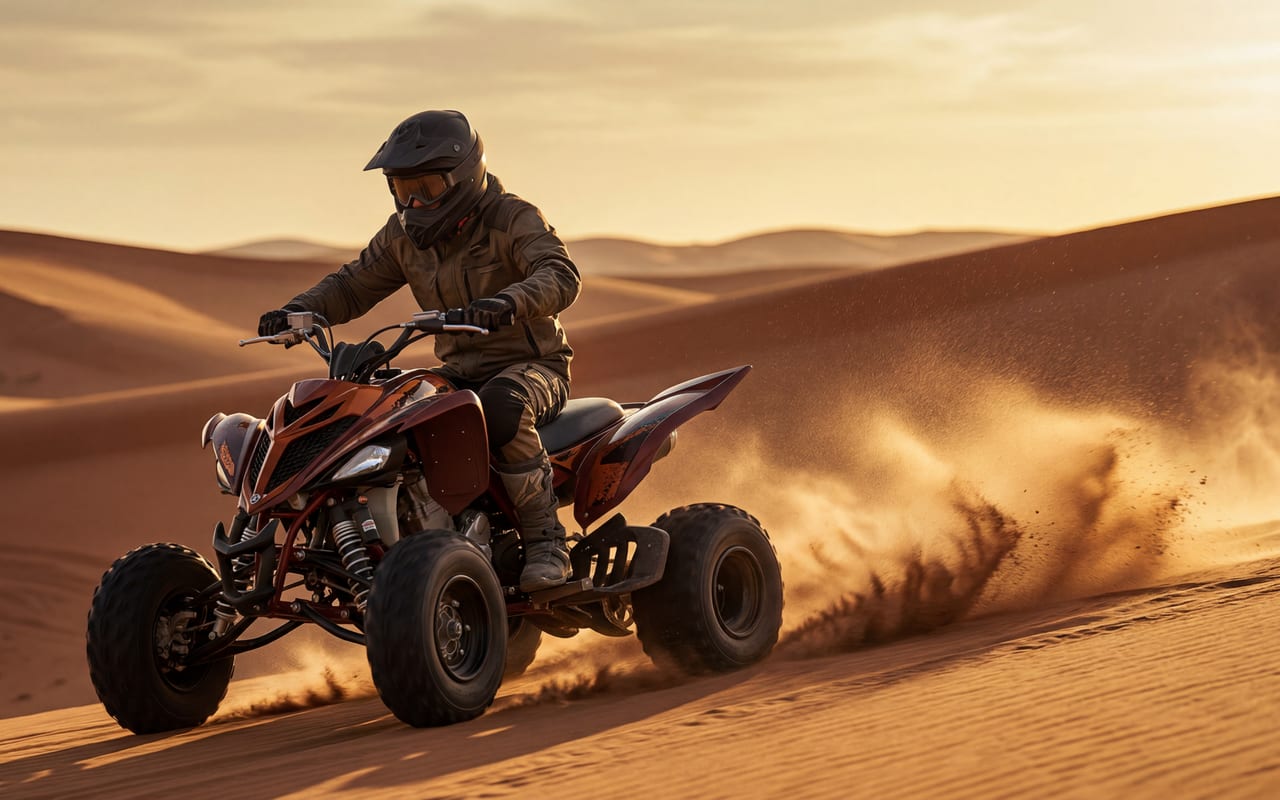
Timing also changes the feel of the trip. A morning ride may be cooler and clearer, while late afternoon can bring softer light and lower sun. Sunset timing is worth considering if photography is a priority, but it can also mean more traffic near popular desert areas. Ask how the schedule is arranged so you know whether the ride happens before, during or after the low light.
Check the route and the level of guidance
A guided trail is usually the better choice for first timers and for visitors unfamiliar with desert driving. The guide can set a sensible line, point out softer sand and help riders understand how the terrain changes. Watch for routes that are vague, such as promises of open riding without any detail about how riders are grouped or supervised.
Good guidance should also cover how to behave around other bikes. Keep a safe gap, avoid cutting across another rider's line and signal before slowing. On a slope, take care near the crest because the drop beyond may be steeper than it looks. A sand dune gradient can change within a short distance, especially after wind has reshaped the surface.
If you are choosing between routes, ask whether the trail includes firm sand, rolling dunes or sharper climbs. Firm sand is easier for beginners. Soft sand asks more of the rider and can make steering feel heavy. Steep dunes are not a simple test of confidence, they require judgement and restraint. A well-matched route should feel interesting without making you rely on luck.
Look closely at safety and fit
Safety is not a box to tick at the start. It shapes the whole ride. A safety helmet should fit properly, sit level and stay steady when you move your head. A loose helmet is a distraction and can become dangerous on rough ground. Ask what protective gear is provided and what you should wear for sun, sand and warmth if the temperature drops later.
Before setting off, take a moment to understand the basic controls. Know where the brake is, how the ATV throttle control responds and how to stop smoothly. Ask where the quad bike engine kill switch is and what it does. This is not about expecting something to go wrong. It is about knowing how to react calmly if the bike surges, the route narrows or you need to stop quickly.
Pay attention to the briefing. A useful briefing explains hand signals, riding spacing, what to do if you get stuck and how riders should regroup. If instructions are rushed or unclear, that is a sign to pause and ask questions. Confidence comes from knowing what is expected, not from being pushed forward before you are ready.
ATV Dubai Desert is one name you may see while comparing options, but the decision should still rest on practical fit. Compare what each option offers in terms of route, supervision, riding time and clarity of instructions. A polished description is less useful than a clear explanation of how the safari runs.
Match the ride to the people going
Group makeup matters. Children, newer riders and anyone nervous about heights or loose sand need a gentler plan. Mixed groups often work best when there is more than one pace or when the route allows shorter sections. If one person feels rushed, the whole group enjoys the ride less.
Clothing and personal comfort are easy to overlook. Lightweight, breathable layers work better than heavy clothing in warm conditions. Closed shoes are sensible because feet can brush sand, rocks or the bike itself. Sunglasses and sun protection help when the light is bright and reflected off the sand. Desert sand temperature can shift across the day, so a ride that feels pleasant at one hour may feel hotter later.
Think about physical demands too. Quad biking involves constant small adjustments through the hands, arms and core. Long sections over uneven ground can be tiring, even for fit riders. If anyone in the group has limited mobility, back discomfort or weak grip strength, choose a shorter and calmer option rather than hoping the terrain will be easy.
Compare the details before you book
Once you have narrowed the choice, read the inclusions carefully. Look for the length of the riding segment, whether there are breaks, and whether transport to the desert area is part of the arrangement. Check what happens if weather affects the plan. Desert conditions can change, and a responsible operator should be able to explain how delays or route changes are handled.
Also check what is expected from riders on the day. Arriving late can compress the briefing and shorten the ride. Ask about meeting points, identity requirements and any age or experience conditions. These details are not exciting, but they prevent confusion when you arrive.
Reviews can help, though they should be read with care. Look for repeated comments about clear instruction, route suitability and how the group was managed. One dramatic complaint may be less useful than several steady notes about organisation. Equally, glowing praise without detail may say little about whether a ride suits your needs.
Make the final choice with a calm head
The right quad bike desert safari dubai should feel exciting but not uncertain. You should know roughly how long you will ride, what terrain to expect, how guidance works and what safety equipment is provided. If those points are clear, the remaining choice comes down to taste: open dunes, a gentle trail, a sunset setting or a fuller desert schedule.
Avoid choosing only by the most dramatic photos. The best ride is the one that matches the slowest or least experienced rider in your group and still leaves room for enjoyment. When the route, pace and safety basics line up, the desert becomes easier to read and the ride feels far more rewarding. ATV Dubai Desert may be part of your comparison, but the final decision should be based on the same practical points you would apply anywhere.
Ends · QUADBIKEDESERTSAFARIDUBAISPARK